Onedayte Blog
The science of love, dating tips and technological innovations.

Why dating apps don't work (and what does)
You know the feeling. You open the app, scroll through an endless stream of faces, swipe right on someone who looks nice, and then: silence. Or worse, a conversation that dies after three messages. After weeks, months, sometimes years on Tinder,...

The anxious and avoidant attachment style: why they attract each other
You send a message. No reply. After two hours you send another one. After three hours you check whether the other person has been online. Meanwhile, your partner is at home feeling relieved by the silence. When you see each other again, the other person acts as if nothing is wrong...
Gottman's four horsemen: patterns that destroy relationships
John Gottman observed thousands of couples in his Love Lab at the University of Washington for more than 40 years. He filmed their conversations, measured their heart rates, analysed their facial expressions. And he discovered something remarkable: he could predict with 91...

Tired of online dating? How to recognise and break through dating burnout
Another match. Another 'hey, how are you?'. Another conversation that dies after three messages. You open the app, scroll for a bit, and close it again. Not because there's nobody there, but because you can no longer muster the energy. The thought of yet another...
Dating app for highly educated people: what really works?
You have completed a university degree, have an interesting job, and a life that suits you. The only thing missing is someone to share it with. You have tried Tinder, but the conversations remained superficial. You are considering Parship or e-Matching, but...

Attachment style and dating: how your pattern determines your matches
Have you ever wondered why you keep falling for the same type of partner? Or why that one relationship that started so well still ended in exactly the same way as the previous one? The answer probably lies in your attachment style: a pattern...
Halo effect: why photos distort your judgement on dating apps
You see a photo of someone on a dating app. Symmetrical face, warm smile, good clothing. Within a fraction of a second you have a judgement ready: this person is surely also intelligent, funny and reliable. It feels like intuition. In...

Paradox of choice: why more matches lead to worse relationships
Imagine: you're standing in a supermarket in front of a shelf with 6 types of jam. You taste a few, you choose, you're satisfied. Now imagine there are 24 types. You taste, you hesitate, you walk away without buying anything. Or you buy something and...

Love Maps: Gottman's method for a deep connection
How well do you actually know your partner? Do you know what's on their mind right now? What their greatest fear is? What they dream about when they're not thinking about work? Not the answers from two years ago, but the answers of today.
Repair attempts: the most underrated skill in a relationship
67 percent of all relationship conflicts are unsolvable. That sounds alarming, but it's actually liberating. Because it means that the difference between a happy and an unhappy relationship isn't the absence of conflict. It's how you...

Dating app without swiping: why slow dating is the future
Swipe left. Swipe right. Swipe left. Swipe right. In less than a second you judge a person based on a photo and a few words. And we call that dating. After years of this pattern, more and more people are realising that something is fundamentally...
The science behind matching: what predicts relationship success?
Can an algorithm predict whether two people will be happy together? The honest answer is: it depends on what you measure.
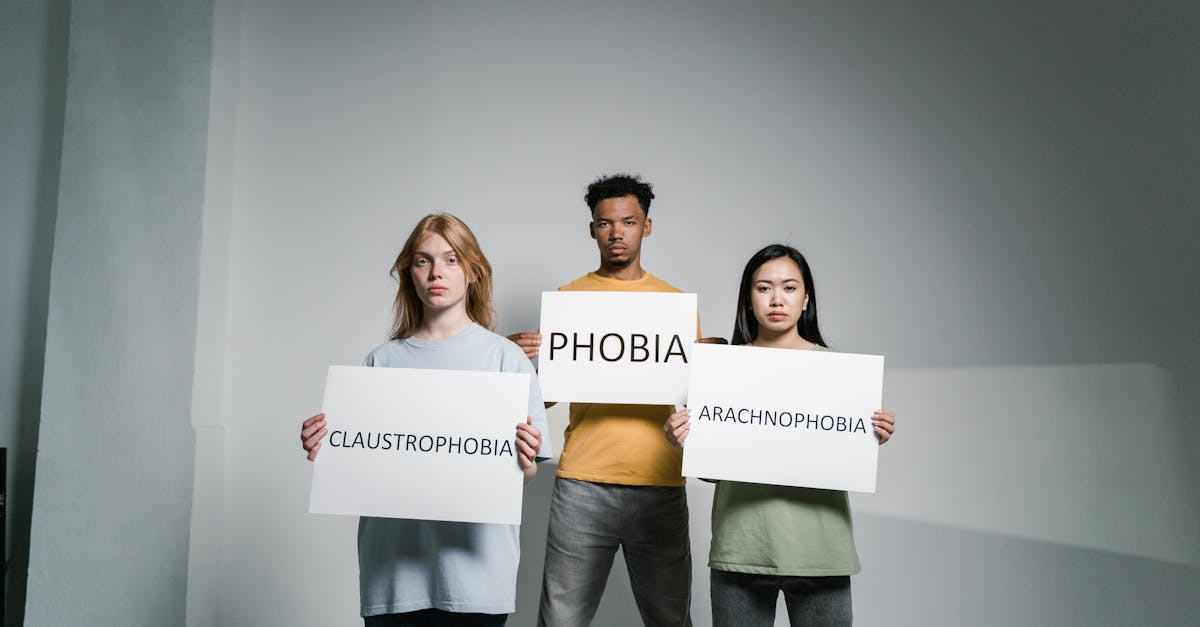
Overcoming dating anxiety: scientific tips that actually help
Your heart is pounding. Your hands are clammy. You have changed your outfit three times and are considering cancelling. Not because you do not feel like it, but because the anxiety paralyses you. The strange thing is: you want this. You want to meet someone. But your body will not cooperate.

Building secure attachment: how to become securely attached
When you discover that you are insecurely attached, it can feel like a diagnosis. As if something is fundamentally wrong with how you function in relationships. As if you are programmed to repeat the same mistakes, time and again.

Emotional availability: why it is the core of a good relationship
Your partner is there, but not really. Physically present, emotionally absent. You talk about your day and notice the attention drifting to a phone screen. You share something vulnerable and receive a rational response ('Maybe you should just...') instead of...

Relationship compatibility: what does science really say?
Does this person suit me? It's the question every dater asks themselves, with every match, every date, every moment of doubt. And the answers we give ourselves are almost always based on the wrong criteria.

What makes a relationship successful? 40 years of research summarised
What if you could predict in 20 minutes whether a relationship will last? John Gottman can. After 40 years of research among thousands of couples in his Love Lab at the University of Washington, he identified the factors that distinguish happy relationships...
Ghosting: the psychology behind disappearing without explanation
You had three great dates. The conversation flowed, there was chemistry, you were already making plans for the fourth date. And then: silence. No message, no explanation, no closure. You send another text. Nothing. You check social media and see that he or she...

Attachment styles explained: discover your relational DNA
Why are some people totally relaxed in a relationship, while others constantly worry whether their partner truly sees them? Why does one person withdraw from intimacy, while the other seeks more closeness? Why do your relationships...

Values in a relationship: why they matter more than shared hobbies
You both love hiking, Italian food and the same Netflix series. Yet the relationship stalls. After a year you notice that you think fundamentally differently about how to handle money, how important family is, and how much freedom...

Being vulnerable while dating: how to build a real connection
You're on a date and the conversation is going fine. Work, holidays, TV show recommendations. All safe. But you feel something is missing. There's no real connection. Not because the other person is unkind, but because neither of you is showing anything of yourself that truly...
Maintaining a relationship: scientific tips from Gottman
Finding a good relationship is step one. Keeping the relationship good is the real challenge. And it's a challenge most couples underestimate. John Gottman's research at the University of Washington shows that relationships don't break down due to a big...
Personality-based dating app: does it really work?
Boo matches on MBTI. Parship on the Big Five. Hinge lets you fill in personality prompts. And more and more dating apps promise that a personality test will help you find the right partner. The idea is tempting: if we know who you are,...
Self-knowledge and better relationships: why self-insight is the key
You've had enough dates by now to recognise a pattern. The same kind of partners, the same kind of problems, the same kind of ending. The names change, the faces change, but the dynamic remains surprisingly consistent. And you wonder...

Fearful-avoidant attachment style: the most misunderstood attachment
You want closeness, but as soon as you get it you panic. You pull someone towards you and then push that same person away. You oscillate between intense longing for connection and an overwhelming need to flee. And the most...

Love languages explained: discover how you give and receive love
Your partner buys flowers. You would have preferred him to sit on the sofa with you for an hour. You write a long message full of compliments. Your partner would have preferred you to load the dishwasher. The feeling of not being heard is mutual,...

First date tips: what science says about making a good first impression
Forget the tricks. Forget the opening lines. Forget the strategic waiting time before texting back. If you really want to know how to have a good first date, don't look at dating coaches on Instagram but at what the research says. And the...

Singles in the Netherlands: facts and figures on online dating
How many singles are there actually in the Netherlands? How do they use dating apps? And what do the figures tell us about the state of modern love? This article compiles the most recent data from CBS research, university studies and...

Dating app for a serious relationship: which one suits you?
You're done with casual. You want someone who is looking just as seriously as you are. But which dating app suits you? The options are overwhelming and the promises all sound the same: 'find the love of your life', 'matches that truly suit...

Best dating apps in the Netherlands: 2026 comparison
The Dutch dating market is crowded. Tinder, Bumble, Hinge, Lexa, Parship, e-Matching, Breeze, Boo, Muzz, and ever more new names. Each platform promises the solution to your love life. But behind the marketing lie fundamentally...

Anxious attachment style: characteristics, patterns and growth
You check your phone every five minutes. You analyse every message for hidden meanings. A short reply from your partner ('ok') can occupy your mind for an entire evening. If he or she comes home later than expected, your heart starts beating faster. Not...
Avoidant attachment style: recognising and breaking through it
Your partner wants to talk about your relationship and you feel the walls going up. Not literally, but something inside you shuts down. You need space, independence, a moment of not having to do anything. Intimacy does not feel like warmth but like pressure. And the...

The Gottman Method explained: 40 years of relationship science
If there is one scientist who comes closest to predicting love, it is John Gottman. Together with his wife Julie, he developed the Gottman Method: a complete approach to relationship therapy and relationship improvement, based on...

Situationship: what is it, how do you recognise it, and what can you do about it?
You do everything a couple does. Eating together, sleeping together, watching Netflix together on Sunday evening. But when someone asks what you are, an awkward silence follows. 'It's complicated.' 'We'll see where it goes.' 'We don't need a...
Red flags in dating: recognise them before it's too late
In the beginning, everything is perfect. The compliments flow, the attention is overwhelming, and you feel like the centre of someone's world. But somewhere something gnaws at you. A feeling that it's moving too fast, too intense, too good to be true. That feeling...

Falling in love and attraction: what science really says
Falling in love feels like magic. Your heart skips a beat, your thoughts revolve in circles around that one person, the world seems more beautiful and more intense. It feels as if fate has brought you together, as if there is a cosmic force at play that is greater...
Why do you keep falling for the wrong type? The psychology behind it
The same dynamic again. Yet another person who is emotionally unavailable, who keeps you at a distance, who shows just enough interest to then let you down. The names change, the faces change, but the script is the same. You...
AI in dating: how artificial intelligence helps you find the right partner
AI is changing everything: how we work, how we communicate, how we find information. It was inevitable that it would also change the way we date. But where some apps use AI to keep you swiping longer (more engagement, more...
EFT: how Emotionally Focused Therapy transforms relationships
When your partner says you never listen, you hear a reproach. You go on the defensive, you list the times you did listen, or you walk away from the conversation. But underneath that reproach lies something else: a call for connection. 'I feel alone...

Personality and relationships: what Big Five and MBTI do and don't predict
Personality tests are everywhere in the dating world. Boo matches on MBTI types. Parship uses the Big Five. Hinge lets you fill in personality prompts. And on social media, millions of people share their INFJ, ENFP, or INTJ label as if it were an...

36 questions to fall in love: Arthur Aron's experiment
In 1997, psychologist Arthur Aron and colleagues published a study that would later go around the world. It appeared in the Personality and Social Psychology Bulletin and the setup was deceptively simple: seat two strangers facing each other, have them answer 36 questions that gradually become more personal, and see what happens...

Relationship pace: when does it get serious? What science says
After how many dates do you declare exclusivity? When do you introduce someone to your friends? When do you say 'I love you' for the first time? When do you move in together? There are no fixed rules, and anyone who claims there are is selling a...

Dealbreakers in a relationship: what does the science say?
You can get along fantastically with someone. The conversation clicks, there's attraction, the values align. But if that person smokes and that's non-negotiable for you, it stops there. No positive trait outweighs a fundamental...

Scientific dating: how evidence-based matching works
What if your dating decisions weren't based on an attractive profile or a smooth opening line, but on 40 years of relationship research? What if every match you received was filtered through the same scientific insights that relationship therapists...

Second date tips: from online match to real connection
The first date went well. There was conversation, there was a click, there was a reason to meet again. But the second date feels different. The nerves are still there, but now new questions arise. Was the click real or was it the novelty? How do you...

Starting a conversation on a dating app: how to make a real connection
'Hey.' 'How are you?' 'Nice profile!' If you've ever received a message like this on a dating app, you know how little it does. It feels generic, impersonal, interchangeable. And if you're honest, you've sent one yourself. Not...
Date night ideas: activities that strengthen your relationship according to science
Another film on the sofa. The same restaurant again. The routine is comfortable, but you feel the connection slowly thinning. Not because of a conflict or a problem, but because of the absence of something new. The relationship is good, but the spark that...