Halo effect: why photos distort your judgement on dating apps
Onedayte Redactie
Expert at Onedayte
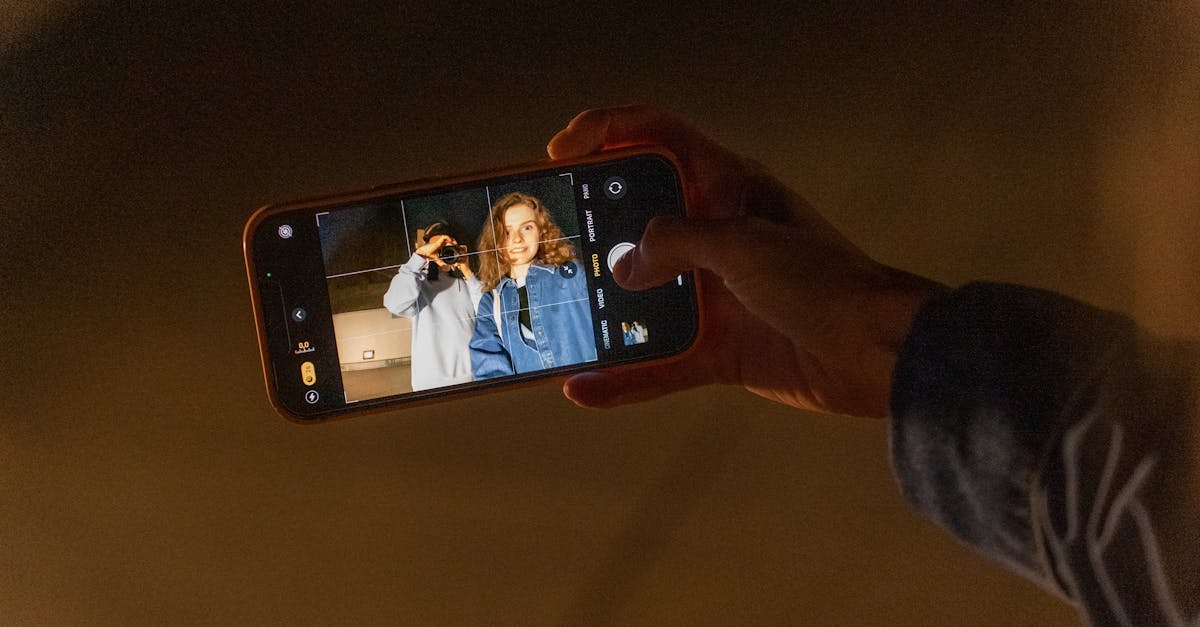
You see a photo of someone on a dating app. Symmetrical face, warm smile, good clothing. Within a fraction of a second you have a judgement ready: this person is surely also intelligent, funny and reliable. It feels like intuition. In reality, it is a cognitive bias that is fooling your brain.
That bias has a name: the halo effect. And it is one of the biggest obstacles to finding a partner who truly suits you.
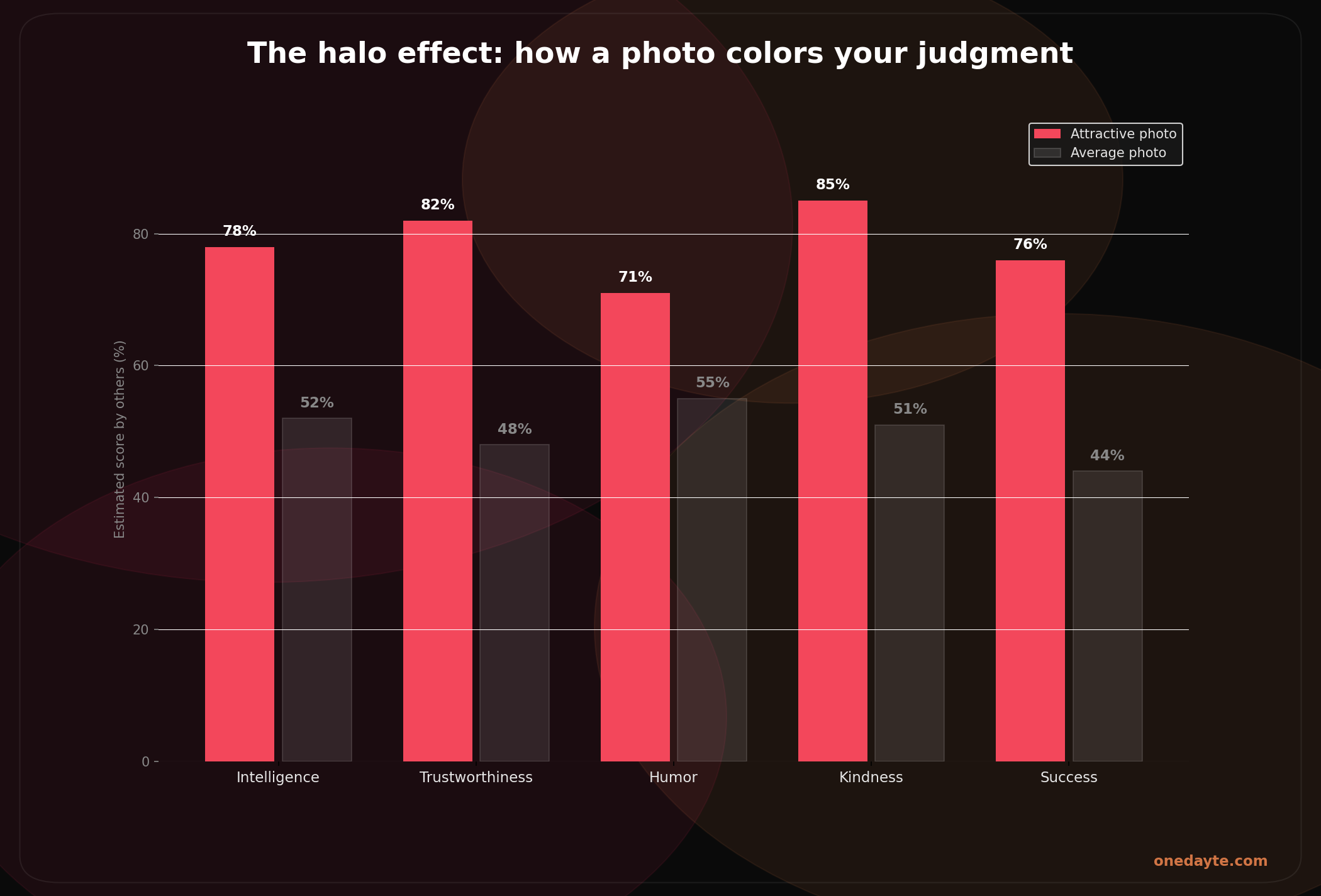
What is the halo effect?
The halo effect was first described by psychologist Edward Thorndike in 1920. He discovered that officers who had to assess soldiers on various qualities (intelligence, leadership, physical fitness) consistently gave higher scores on all dimensions to soldiers they found physically attractive. The positive impression of appearance radiated like a halo over all other assessments.
Since then, the effect has been confirmed in dozens of studies. Attractive people are rated as more intelligent, kinder, more reliable and even morally superior. Without any evidence to support it. It is one of the most robust cognitive biases we know of.
How the halo effect works on dating apps
Dating apps are designed around photos. The first thing you see is a face. Only then do you (maybe) read the bio. This means the halo effect is maximally active at the moment you make a decision. You swipe right on people who look good and ignore profiles that might suit you much better, but that don't pass the visual selection in 0.3 seconds.
The research is consistent: the factors that determine initial attractiveness (symmetry, physical features, clothing style) are entirely different factors from those that determine whether you'll still be happy with someone after two years (emotional responsiveness, conflict repair, shared values). Due to the halo effect, you optimise for the wrong selection criteria.
Worse still: the halo effect masks potentially serious incompatibilities. Someone who looks good is not only rated as kinder, but also as more reliable and more stable. Red flags that would immediately stand out with a less attractive person are unconsciously ignored with an attractive person.
The mere exposure effect as an antidote
Psychologist Robert Zajonc discovered the mere exposure effect in 1968: familiarity increases attractiveness. The more often you see, hear or speak to someone, the more attractive you find that person. This even applies to people you initially found neutral or unattractive.
The implication for dating is far-reaching. If you first get to know someone through conversation, without the visual bias, you judge the photo afterwards in a completely different context. The personality you've come to know colours your view of their appearance. And that colouring is often more positive than the unbiased first impression would have been.
Many happy couples confirm this pattern. When you ask them whether they found their partner physically attractive at first meeting, a significant proportion say: not necessarily. But as they got to know the person, the attraction grew. That is the mere exposure effect in action. It doesn't work despite the science, it works exactly as the science predicts.
The challenge is that the current dating ecosystem sabotages this natural dynamic. By using photos as the first filter, potentially excellent matches are filtered out before there is any chance for the mere exposure effect. People you might have found fantastic in a chance encounter in everyday life are swiped away in a quarter of a second based on a single photo taken at an unfortunate moment.
Onedayte's Progressive Reveal
Onedayte applies this insight through the Progressive Reveal system. At the first presentation of a match, the user sees a heavily blurred photo: enough to recognise general contours (gender, build, hair colour), but not enough to form an attractiveness judgement.
After 5 exchanged messages, the first photo becomes clear. At that point, there is already a basis of curiosity and emotional engagement. After completing the first Love Maps round, all photos are released. The user then already knows the match's inner world, meaning appearance is judged in a much richer context.
"Happily married couples aren't smarter, richer, or more psychologically astute than others. But in their day-to-day lives, they have hit upon a dynamic that keeps their negative thoughts and feelings about each other from overwhelming their positive ones."
— Gottman & Silver, The Seven Principles for Making Marriage Work, 1999
Sources: Dion et al. (1972), Thorndike (1920)